ተዝታ

Family Archive

Enter the family code to continue

That's not the right code

Beginning
Beginning Prologue My Father's House The Seven Families Under the Italians A Pampered Childhood Wingate The Fall America ተዝታ
ተዝታ  ·  tezeta

The Story of
Amha Selassie

Born in Axum, 1951. A father's memories — of emperors and obelisks, of a country lost and a life rebuilt across the sea.

25 minute read

Scroll
"My father stopped the emperor's motorcade in the middle of the street while it was driving. The bodyguards hustled him, asking who he was. The emperor stopped the car and said, What is this about?"

In November 2022, Amha Selassie sat down with his son to tell the story of his life — from his childhood in the ancient city of Axum, through the upheaval of the Derg, to his journey to Washington, D.C. These recordings, over many sessions and many hours, became this archive.

What follows is his voice, edited for clarity but never for character.

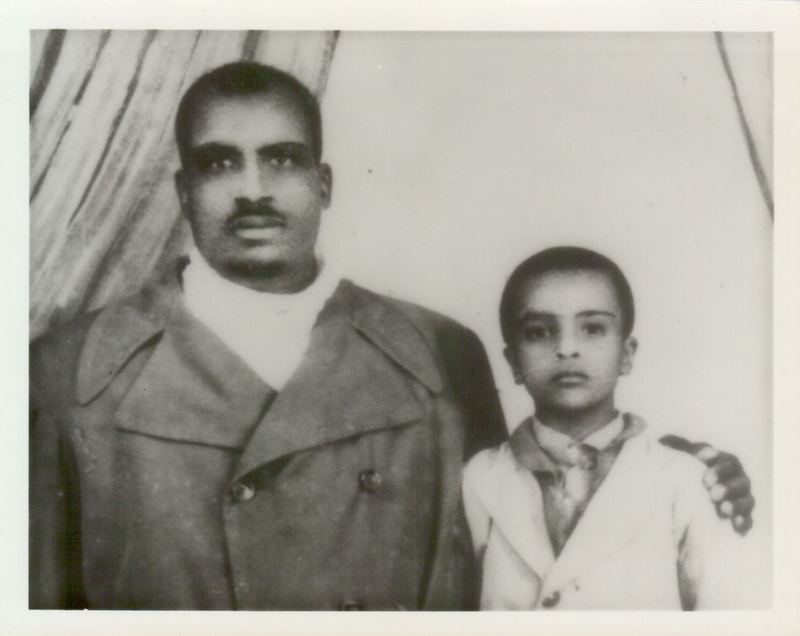
Amha's father Wolde with young Amha, circa 1960
Wolde with his son Amha, Axum, circa 1960

Chapters

  1. 01

    My Father's House

    The tax collector, the judge, the man who stopped an emperor

  2. 02

    The Seven Families

    Lineage, the Hosanna procession, and the question of pedigree

  3. 03

    Under the Italians

    Occupation, imprisonment, and his mother's interrogation

  4. 04

    A Pampered Childhood

    Church school, barefoot soccer, and breakfast with the governor

  5. 05

    Wingate and the World Beyond

    Shakespeare without context, Addis Ababa, and the British ambassador

  6. 06

    The Fall

    The Derg, the killing of the sixty, and the decision to leave

  7. 07

    America

    The Hague, Georgetown, and a life rebuilt

My Father's House

My father was a big man, both physically and socially and morally speaking. He was highly respected in the community, and he was dedicated to helping other people and to promoting new ideas and new activities in Axum. He started out as a young man, appointed at an early age as a tax collector for the city. He was responsible for collecting taxes from merchants and traders and market activities, and that gave him a position that enabled him to have contacts with a variety of people and with various segments of society.

As a result, he was called upon to do a lot of things. Whenever there was a need for mediation, he was always asked to be part of it. He was leading some of the activities in the church, working with the head of the church and high priests and people involved in church affairs.

When the emperor came to Axum many years ago, I was very young at that time, my father stopped his motorcade in the middle of the street while it was driving. The bodyguards hustled him, asking who he was and so on. The emperor stopped the car and said, what is this about? So my father went over and the emperor said, what do you want? He told him that Axum, being one of the oldest cities in the country, had been neglected over time. One of the examples he gave was the fact that there was no hospital in Axum—only a clinic. He was asking the emperor to make it happen. The emperor instantly agreed and said, we will do it. Two years later, the hospital was built. It is still standing. It is the main hospital in Axum now.

"What my father told me later in life was that the reason he kept in good standing with almost everybody was because he made a decision early on that he was not going to ask for land from anybody. He said, if I have to have it, I have to work for it. He said it creates acrimony, people become angry, and that creates conflict. So he decided not to do that, and he said it changed everything for him."

I remember one day very clearly—two people were beating each other up, and one of them took a knife out. The bystanders started screaming because one was going to kill the other. My father came out and they said to him, can you tell them? He looked at them, called them by name, and said, stop. Both of them froze. He said, what do you have? One said a stone. The other said a knife. The third said a pistol, which was unheard of at that time. They brought everything out and put it in front of him. He said, come. I want you to make peace, and you will start now. Whoever made the mistake says I am sorry, and the other accepts it. And they did.

One day, a gentleman was coming to the house. As he came to the door, he changed the way he was wearing his gabi—the way you drape it tells a story, it signals deference. My father jumped out of his chair and ran to him, and they started struggling. At the time I did not understand what was happening. What had happened was, the big man was wearing his gabi in a way that showed respect, lowering himself. And my father was saying, no, you are too big—you cannot do this in my house. I will not allow you to put yourself below me. It was like fighting for the restaurant bill. These small things meant a great deal.

Every year, Axum hosts the Mariam Sion festival, a big holiday where people come from all over the country. What I remember is that all the big personalities who came to town came to our house for lunch or dinner. Growing up, I had no idea who was who. You knew somebody was important because people deferred to them and followed them. But later on, when I realized who they were, I saw they came from all different backgrounds, from the highest to the lowest. Nobody else would dare invite some big personality to their house because it would feel presumptuous. But that did not happen with my father. He would invite everybody, and they would come.

My mother was a very nice lady—a housewife who did not go out of the house. Everybody came to her, but she rarely went anywhere. The house was a family center. People came all day long. There was laughter and arguments and entertainment and eating and drinking. Hosting all sorts of people—everybody had to get something. If it was a small child, they gave him a small loaf of bread or some treat. For important guests, the finest they had.

"The first time she visited, in 1985, when I went to work she was alone in the apartment. She was watching the soap operas during the day. She followed the stories perfectly, even though she did not understand a word of English. The characters, who was dependable, who was the cheat—she had it all figured out. You do not need the language."

The second time she was here was 1992, when Clinton was running for office against Bush. The first time she looked at Clinton, she said, he looks too plain, too light—how is he going to be president? But about a month later, she said to me, I have changed my mind. He is going to be the next president. I said, what? She said, the whole thing has changed. He has an aura around him now. She bet me he would be the next president. And he was.

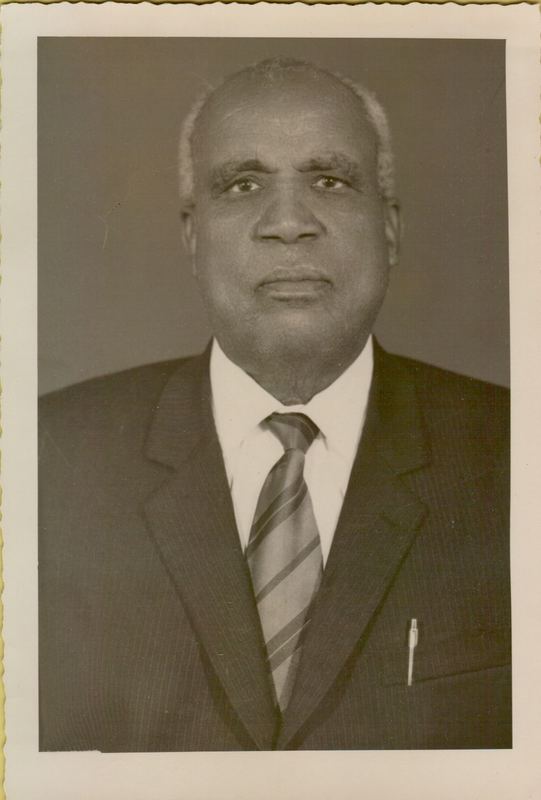
Wolde, Amha's father, formal portrait
Amha's father, Wolde — tax collector, judge, and the man who stopped an emperor's motorcade to demand a hospital for Axum

The Seven Families

The family traces itself, in very general terms, to the time of the Queen of Sheba and the Menelik legend. The way they tell it is that seven tribes came from Israel when Menelik returned to Axum after visiting his father, King Solomon. Those seven families, when they came to Axum, were able to maintain their lineage. They have names—the so-and-so family is here, the so-and-so family is there. To this day, there are people who trace their lineage from one or the other of these families. Is it true? That is another question. But people believe it and people act as if it is true. These are the families that go back basically two thousand years. Because of that, they feel entitled. Nobody is above them. The word they use is fugo, which roughly means the source, or the original.

I did not understand any of this until later in life. My father never told me anything about it. Nobody talked about it, nobody bragged about it. It was just normal for them among themselves. They would only raise it if somebody challenged them, which did not happen frequently.

"You would be told by your aunts, do you know who you are? When you are a kid, you do not know and you do not care. But it stays with you."

A week before Easter, there is a holiday called Hosanna, which in Axum is a big event—people come from out of town, and there is a procession that starts at somebody's house and goes to church. Mules and horses are decorated, and this ceremonial activity starts at the house of one of the fugo elders. The seven families rotate. If you come from the main lineage, the procession starts from your house. The next year it is from the next family, and the third, and the fourth, and so on. It comes back around after seven years.

In the end, the privileges were mainly ceremonial. In the old days, they may have had other significance, but by the time I was aware of it, it was ceremonial. When modernization came, it got diluted—other players came onto the scene, people who had money, modern education, other resources. But the idea remained. People had it in their minds and nobody was going to take it away.

The underlying logic was simple: Axum was the center of everything, the source of civilization. We were the original people from Axum, therefore we represented something fundamental. What mattered was not material wealth or momentary power, but knowledge of oneself. People would say, I may be poor now, but I know who I am. You may be rich now, but you are nobody.

Under the Italians

My father was imprisoned by the Italians. When they invaded around 1935, he went to fight. Everybody went to the countryside, but they were not well organized where he was, so there was nothing they were really doing. Meanwhile, my mother was at home. The Italians started harassing her—where is your husband, and so on. They came to the house and searched the premises. When they looked up at the ceiling, they saw a painting of the Ethiopian flag in the decorations. They were furious. My mother did not even know it was there—it was part of the decoration. Because of that, they started harassing her.

She said she was very scared. They came as a group with an interpreter, a young man from Eritrea who understood some Italian. And in the process of harassing her, this young man said to her, in Tigrinya, quietly: whatever they ask you, say no. They will tell you they know this or that—they don't know. Be calm, be strong, do not panic. Do you have arms? No. Do you know where your husband is? No. He helped her out.

After that, they started pressuring my father to come back, promising he would not be punished. But when he returned, they arrested him. They told him what he needed to confess and decided to give him forty lashes. Then the head of the church in Axum, who was related to my mother, went to the Italians and said, this is my son, you gave him a promise, he came, how can you do this? The day he was supposed to be whipped, they came and told him he could go home.

"One surprising thing I learned was about my great-grandfather. One day the emperor came to visit him and entered the house on his horse. The horse destroyed the bamboo floors. My great-grandfather was so offended that the next time, he lowered the height of the door so nobody could ride in again. He could not say no to the emperor directly, but he could lower the door."

My grandmother was still alive when I was growing up. For her, Addis was a place that took everybody and never returned them. Her uncle went to Addis. Her brother went looking for him and stayed there. Another brother followed and stayed. Her sister decided to go look for all of them and she stayed. When I told her I was going to Addis, she was very angry and frustrated. When I came back after a year, she was very relieved, because she had not expected to see me again.

She used to tell us that when she was a little girl, there was a game the children played. The game said: may your children go to Shewa and Gondar, and your grandchildren disperse everywhere. She used to say, I have come to see that my children went to Shewa and Gondar, but I am not sure what is meant by "your grandchildren disperse everywhere." She wondered about that. Now, I think, she would know exactly what it means.

"May your children go to Shewa and Gondar, and your grandchildren disperse everywhere."

A Pampered Childhood

I was born, depending on who you ask, on different dates. The main thing was that my parents were married for almost twenty years before they had a child. So it was a big surprise that I was born, and everybody was delighted. Everybody pampered me in my childhood, basically. I was also fortunate enough to come from parents who were, if not well-to-do, but reasonably well-off for the time and for the surroundings. I got everything that any child at that time could get—proper clothing, shoes, food, and whatever it was that was available at that time that money could buy.

The most interesting thing was, I refused to wear shoes to a very great extent, because the other kids did not have shoes. And if we were going to play soccer with them, they wouldn't allow you to play with your shoes, because you'd have a big advantage over them. So the easiest thing was to avoid wearing shoes, and my parents basically insisted that I do. So I would go out wearing shoes from home, and then I would take them off and come back and put them on again, several times like that.

"It looks funny now, but there was a need to conform and to be not different from everybody, so you don't want to be looking odd in whatever way it is. We tried to conform to the surroundings."

Before soccer took over, there were a lot of traditional games. My generation was in the transition period. Around Christmas, we had sticks that we used for singing and dancing during the holidays. Preparing the stick was a long process. You had to get the right one, then cut a revolving ring around the shaft and put it in fire. The exposed part turned black, and when you peeled the rest, it stayed white—so you had a black and white stick, which was the thing. Then there was a game where we got big nuts from palm trees, carved them so you could tie strings around them and throw them to spin on the ground. If you made holes in them, they whistled. The sound of the whistle, the way you cut it—that was a very important part.

When I was six or seven years old, the governor of Axum used to see me in church and took interest in me. One day he told me that if I came to church on Sundays, I would have breakfast with him. This was intimidating and exciting at the same time—intimidating because I did not know what to say to him, and exciting because it meant I would ride in a car with him in the morning. That was something not available to any child.

During breakfast, I would sit at the table with him—something out of the ordinary, because he was a governor, highly respected, and only a few adults were allowed to sit at the same table. He was different from other adults—he talked to me like a friend and encouraged me to participate. At that time, children were not allowed to answer back even when they were spoken to.

My mother was horrified when I first left home. I was fourteen years old, and we had to go to Mekelle for high school. She was praying all year long that I would fail my exams and stay another year. When you took the exam, they gave you a number, and the results were printed in the newspapers. Mine was there, and she was disappointed—because she had wanted me to stay at least another year.

Wingate and the World Beyond

The first time I went to Addis was after I completed the eleventh grade. A great-uncle of ours—a general—had said that I should come to Addis and finish school there. So I went, not knowing what to do or where to go. Only hopes that something would happen. But when I arrived, the general was in the United States.

Finally, the general's brother-in-law said he would take me to General Wingate School. That did not sound right to me. You could not just walk into General Wingate. They did not accept anybody new at the higher grades. When we went in, the headmaster said, twelfth grade? No way. We have never done that. There was a back-and-forth, and then the brother-in-law said, oh, but the ambassador told me he could go here. The headmaster's attitude transformed completely. Oh, yeah, yeah—is that him? He can start as a day student on Monday.

"I still remember the transformation in the headmaster's attitude—from seriously saying no way to suddenly welcoming me. That is how the world works."

One of the most important things that happened at Wingate was that the deputy director asked, do you want to learn English literature? Not knowing what he was talking about, I said yes. The teacher was an Englishman, and he was teaching Macbeth. He was teaching it as if he were acting it, with the English accent and everything. I had no idea what I was into. I did not have any inkling about what they were talking about. Even the name Shakespeare—I knew it in name only.

If you take Animal Farm, we had no idea about the French Revolution, the Russian Revolution. We had no idea who Stalin was or what communism meant. It was taught in a kind of blindness. The same thing had happened earlier, in the tenth grade at Mekelle, where an American Peace Corps teacher wanted us to read Moby Dick. But we did not understand it. We had no idea about sailing, no idea about ships, no idea what whales were, no sense of the sea. If you do not know a whale, you do not know what they are talking about.

I was six or seven years old the first time I went to Asmara. There was a big incident on the way. The bus we were on went over the edge of a cliff. Two-thirds of the bus was hanging, about to tumble down. But for some miraculous reason, it had stopped over a bridge, and the pavement of the bridge caught the back tire. The story was that my father was getting ready to throw me out the window—just take your chance before you tumble down.

What I remember most is what happened next. The next car that came was carrying the Archbishop of Tigray. When he arrived and saw me, he wept. Because it was a miracle that we survived. He kept saying it was the angels of this cave that saved everybody. Then he gave my father and me a ride to Asmara in his car. The car was a Dodge—everybody said Dodge. It was a big thing. Nobody knew exactly what it was, but everybody knew it was a big car.

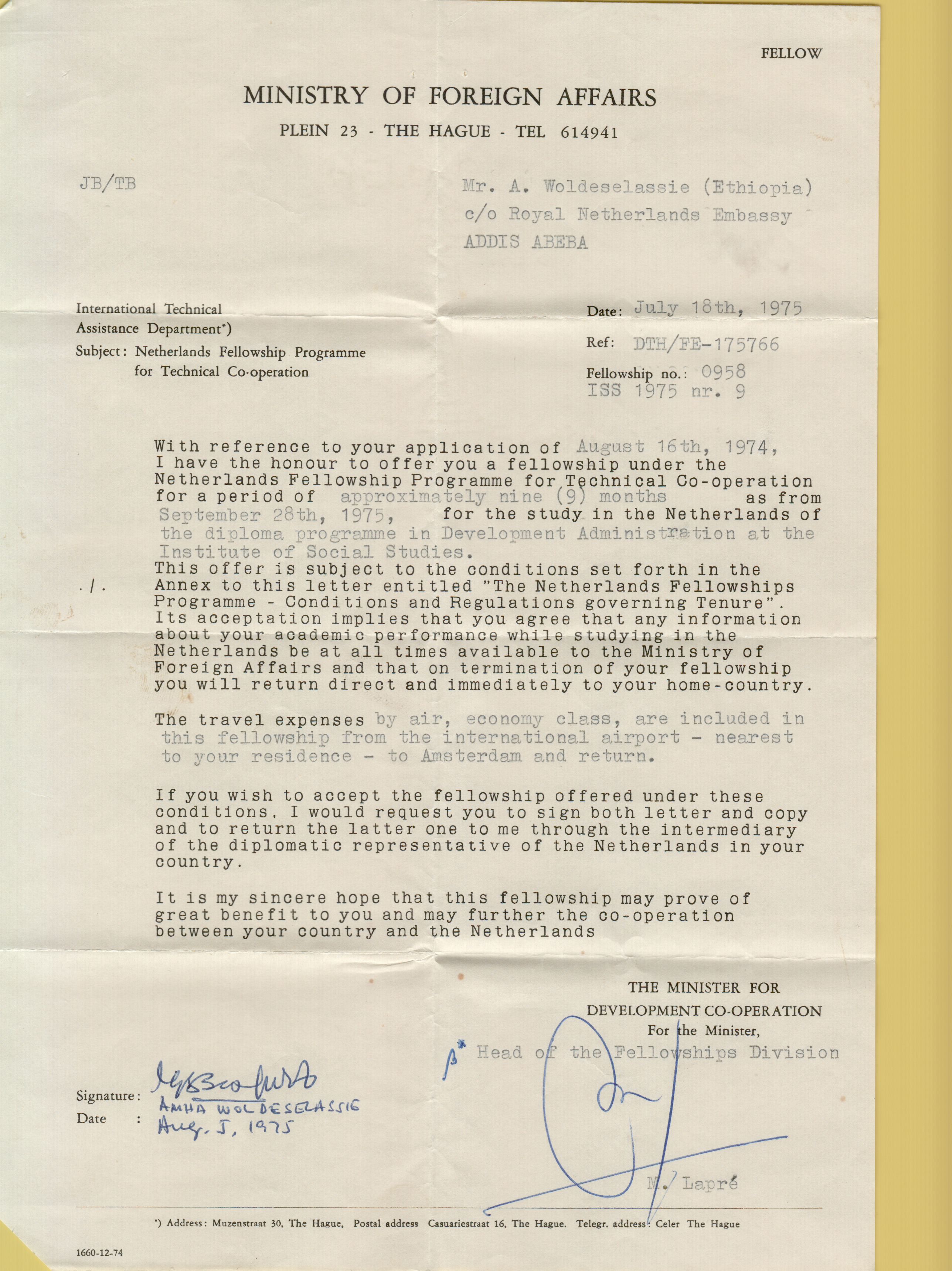
Netherlands Fellowship letter, 1975
The fellowship letter from the Netherlands Ministry of Foreign Affairs, 1975 — the document that allowed Amha to leave Ethiopia for the first time, at a moment when it was extremely dangerous to stay. It is not a little exaggeration to say this letter saved his life.
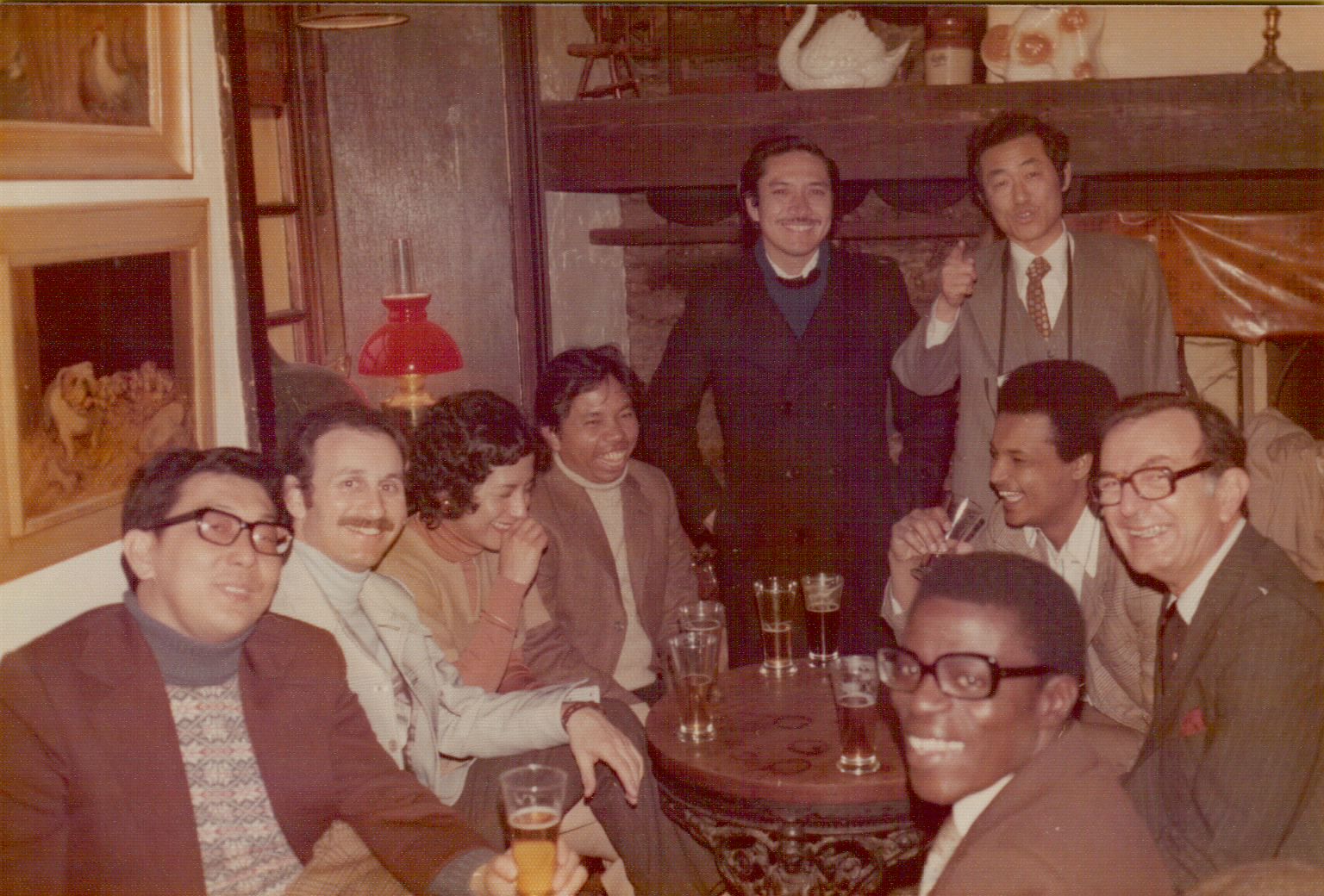
Amha and colleagues abroad
With colleagues abroad, mid-1970s

The Fall

Everybody—the students, the young people—was always clamoring for change. And everybody wanted change. It was going to happen one day. But nobody knew what exactly change meant. One of the most powerful people in the country came to me one day and said, what do young people want to do? Why are you making all this trouble? Then he pushed: tell me, what do you want? I said, I think the young people want change. He said, what kind of change? Everybody wants change, but nobody knows what.

When the change came, it was not surprising—it was expected. What was surprising was that it ended up in the hands of young military people whom nobody knew. That was the biggest problem. It was said there were about 120 of them. But nobody knew who was who, and in the early days they were not naming names. That created enormous uncertainty—who are they, what motivates them, what drives them, what will they do next?

"One of them told me: I want to introduce as radical a reform as possible. Because I do not belong here. I do not expect to stay here. If I do it halfway now, the next group will wipe it out completely. But if I do the most radical thing, they will reverse it halfway—and then we will have done something."

From my vantage point, the defining moment was the killing of the sixty people. Let me start on the Saturday. Saturday, at about six-thirty in the evening. We used to live in a compound with two other families. One of them was a major in the army. As I was entering the compound, we met at the gate. He was fully dressed in his military outfit. That was unusual—a Saturday evening, they did not wear those things at that time. I jokingly said, oh, now they are putting you as a guard somewhere? He laughed. Then he said, are you staying home? I said yes. He said, stay home this evening. Do not go out.

Half an hour later, he called. He said, tell my wife that I have arrived safely. Around eight-thirty, a friend called and asked, is there gunfire in your area? Our house was across the street from the palace—the office of the Derg, where the people were detained. He said there was a lot of gunfire. I said no, I do not hear anything here. Then the telephone stopped working.

The next morning, early, one of the neighbor's daughters—she was about three or four years old—came running to our room. She was saying, my father is crying, my father is crying. I said, what happened? She said, Ras Mengesha is dead. There was no way a child that age could know that name on her own. I knew something had happened. We turned on the radio. The story was being announced. That is how we learned.

There were sixty people altogether. I knew about forty of them, at some level or another—people I could salute on the street if I saw them. What would be the equivalent here? There is no equivalent. Whatever sixty people you collect, it is not going to have the same impact. It was a very, very shocking thing.

One day there was a big demonstration, with Derg leaders reading slogans. I did not go. On a Saturday morning, my friends and I were having coffee at an outside café instead. The security chief saw me on Monday and said, I saw you at the demonstration the other day. I said, you did? Then immediately I understood. So I said, I was waiting for you at the café, but you did not show up—what happened? He laughed. He knew I was not at the demonstration. He was letting me know: I saw where you were. You learn to stay on your toes.

America

At the end of July 1975, I got this call. The lady on the other end said, congratulations, your scholarship has been approved. At that particular point, I had practically forgotten about it. I was not sure whether it was a prank call or a real call. Everybody was scared. I said, ma'am, I am in the middle of something now—can I give you a call in a few minutes? She gave me a number, and I said I would call back. I tortured myself for over half an hour, just waiting. Then I called. When I called, it was the operator of the Dutch Embassy. I said to myself, oh, it is real.

Now the problem was: how do you go out if the government does not allow you to go out? The Minister of Interior was a friend of mine. I went to him and told him the opportunity had come. He said, do not tell anybody—leave, and leave very quickly. I am happy for you.

When I was getting on the plane, I was worried until it left Ethiopia. The plane from Addis landed in Asmara. I was sitting there and people were coming in and out. Somebody called my name. I heard it and did not stand up. For a minute I thought, this is it. But then there was no movement, nobody was trying to find me. They closed the door and we started taxiing. I did not believe it until we landed in Khartoum.

"I got a letter from my father. The letter said: it is a good thing that your time is coming up and you are finishing school soon. But remember, this is a chance you cannot get again, so make sure you get more education and do not rush to come back home. That is the wax and gold. If that letter had been intercepted, it would read: we told him to study more. But it was clear to me what it meant."

At the Institute for Social Studies in The Hague, there were students from sixty-six countries. That was the great value. You learned about the world for the first time. Students from Indonesia, the Philippines, Israel, Palestine, Bangladesh, India, Pakistan—they argued furiously against each other. These personal encounters were more educational than any class.

One of the most interesting lessons I learned in Holland: someone I knew was receiving financial assistance, basically on welfare. In June he received two checks. He came to me and said, I think they made a mistake. A Dutch friend explained: this man is getting welfare because society could not provide him a job. It is not his fault. Now it is summertime, and everybody in his neighborhood wants to go on vacation. We do not want these people left behind. So we give them money so they can also go on vacation. That was mind-blowing.

I came to Washington almost by accident. A professor at a seminar in Connecticut asked what I planned to do. I said, if I can, I would like to go to school here, but I have no money. Within a week, I had an application, an admission, and a letter. Completely unreal. I did not plan for it. I did not hope for it. It just fell on me.

In Boston, I had a telephone number for someone who had gone to school with me. We went to dinner, and I told him I had two cousins who lived in Boston. He said, oh, that address is the street next to us. When we went out to the street and were walking, there was a young man walking across. Suddenly I remembered his face. I said, wait a minute. Are you Solomon? That freaked him out. He said, who are you? Then we went to the apartment and knocked at the door. Who comes out—Getachew. I found both of them within the first two hours after I arrived. What luck.

My father passed away in 1983. I was not able to go back for the funeral. One day at lunch I was walking on Massachusetts Avenue and my boss saw me and thought I was feeling down. He came to me and said, if you want to go home and you do not have the money, we will buy you the ticket. That was very, very touching.

The thing I learned is that the higher people are in the ladder, the more humble they are. Because they are sure of themselves, they do not pretend, they do not want to extract attention or honor. They have it all and they know it and they do not care about that. After that experience, there was no person I could meet who would intimidate me. If those people had not thrown me out of the room, nobody else would.

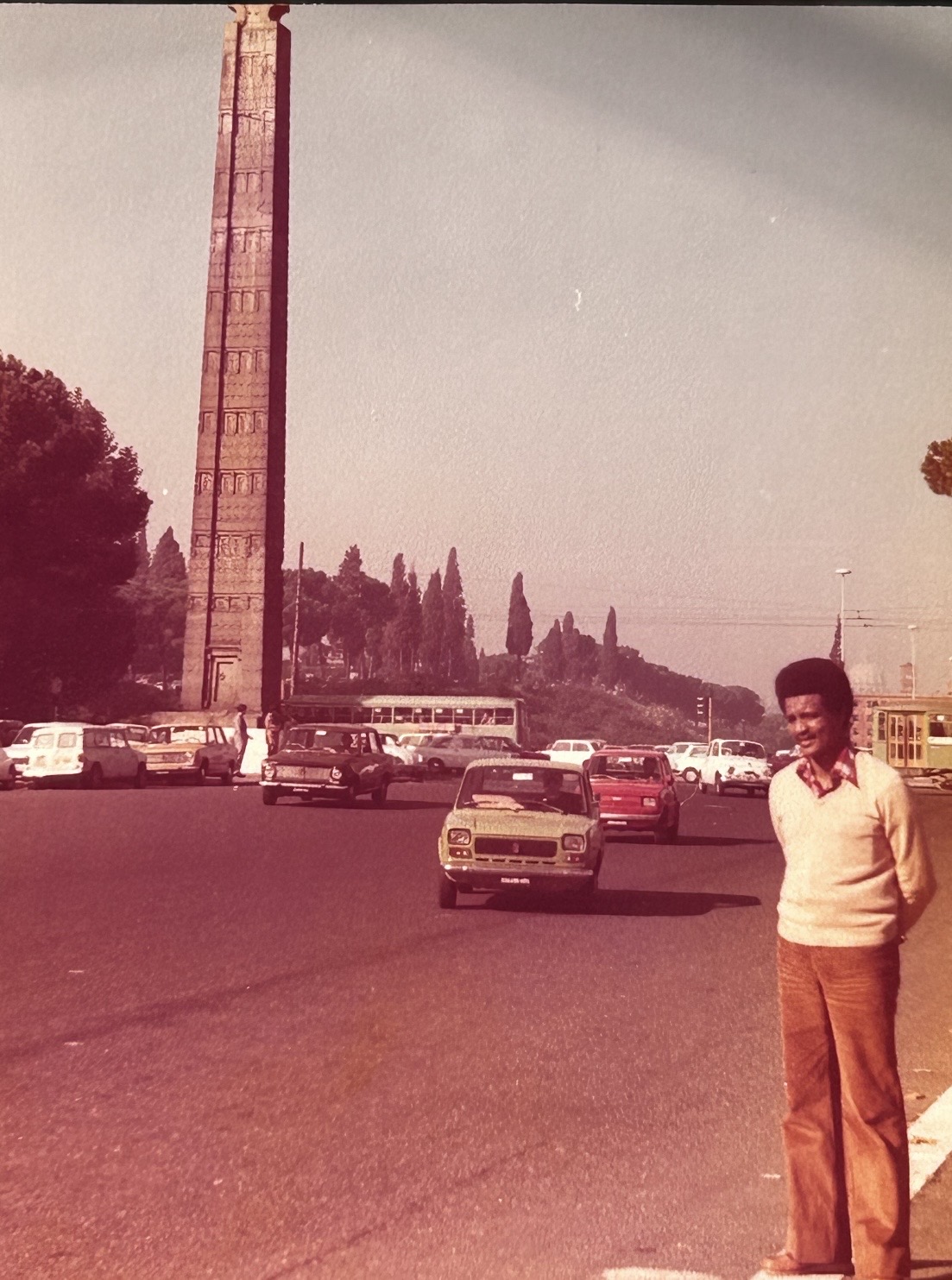
Amha standing before the Axum Obelisk in Rome, mid-1970s
Rome, mid-1970s — Amha before the Obelisk of Axum, looted by Mussolini in 1937 and not returned to Ethiopia until 2008. A man from Axum, in exile, face to face with a piece of home that had also been taken away.
Amha with international colleagues at a pub
With fellow students from the Netherlands fellowship program, 1975–76